Browse Public Registry Archives for 3444865214, 3888727620, 3486102193, 3792844155, 3501456150

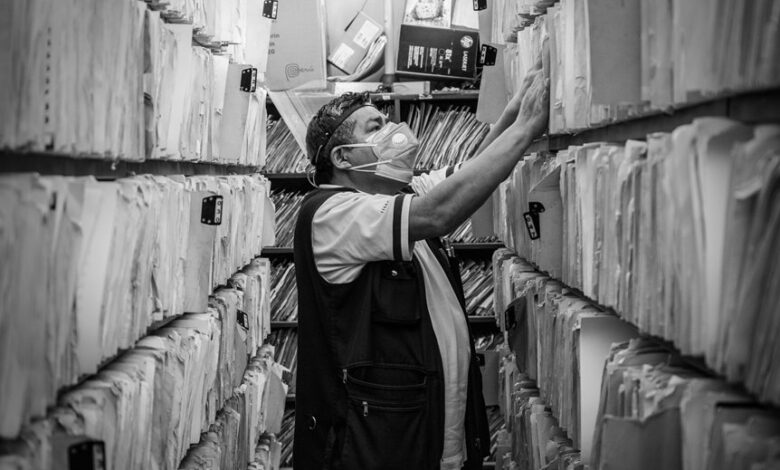
The Public Registry Archives offer a structured introduction to the five identifiers: 3444865214, 3888727620, 3486102193, 3792844155, and 3501456150. Each entry presents provenance, modifications, and current status in a controlled sequence. The records invite verification through cross-referenced metadata and traceable lineage. A careful, methodical approach reveals gaps and correlations, guiding the archivist toward coherent narratives. The next step promises a disciplined path to authentic ownership and status clarification.
What the Public Registry Archives Reveal About Each ID
The Public Registry Archives present a structured ledger of each ID, detailing its provenance, modifications, and current status. Each entry yields analysis of lineage and change events, clarifying how records evolved through time. The documentation also offers workflow insights, illustrating access patterns, revision triggers, and interconnections among identifiers. This neutral cataloging supports informed, autonomous interpretation and responsible, freedom-minded utilization.
How to Verify Authenticity and Ownership Status
Verification of authenticity and ownership status relies on a structured evaluation of records within the Public Registry Archives. The process emphasizes verification accuracy, cross-referencing metadata, and corroborating provenance tracing against primary documents. Archival integrity is maintained by documenting provenance steps, while ownership history is reconstructed through stable, auditable chains, enabling independent assertions about asset legitimacy and rightful title.
Step-by-Step Search Workflow for 3444865214, 3888727620, 3486102193, 3792844155, 3501456150
A methodical search workflow for the five identifier numbers—3444865214, 3888727620, 3486102193, 3792844155, and 3501456150—maps a step-by-step approach through the Public Registry Archives to locate, verify, and correlate records. The process emphasizes archival workflows, ownership status, authenticity verification, historical metadata, and tracing stories, delivering clear, precise results while honoring the freedom to explore. step by step, methodical.
Interpreting Archival Metadata and Tracing Historical Stories
Interpreting archival metadata and tracing historical stories requires a disciplined approach to provenance, context, and lineage, ensuring that each data point informs a coherent narrative rather than a mere catalog entry.
This process constructs insightful chronology from archival metadata, aligning records, sources, and gaps.
Detachment clarifies interpretation, while rigor preserves integrity, enabling readers to pursue freedom through structured, corroborated historical understanding.
Conclusion
In meticulous, methodical movement, archival analysis assembles account after account. Provenance procedures provide precise patience, preserving pithy particulars: particulars, proofs, provenance trails. Cross-referenced cataloging confirms consistent cadeia of changes, clarifying current condition. Verification ventures validate ownership, status, and sequence, safeguarding stringent standards. Structured steps show sagacious sequencing, supplying sturdy summaries. Through thorough tracing, temporal tales take tangible form, training trust. Thoroughly, the registry reveals rigorous, reliable records, reinforcing resilient, reproducible results for researchers and readers alike.