Review Identity Lookup Records for 3510069938, 3771713016, 3501644009, 3533788458, 3894656191

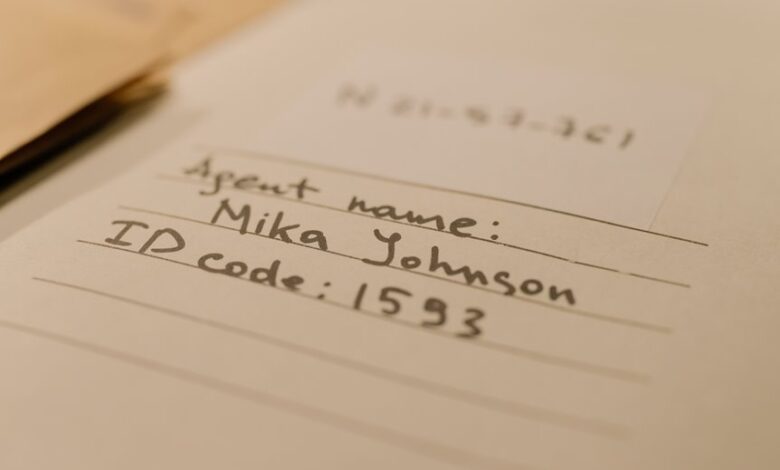
The review of Identity Lookup Records for 3510069938, 3771713016, 3501644009, 3533788458, and 3894656191 will map field values, flags, and timing to establish cross-entry consistency. It will note deviations in origin, destination, and service identifiers, while applying privacy-focused controls and consent considerations. The discussion will identify potential inconsistencies and risk indicators, then outline verifiable steps and governance measures to validate each case. The goal is to prepare a concrete path forward for confirmation and action, should anomalies emerge.
What Identity Lookup Records Reveal About Each Number
Identity lookup records for the listed numbers reveal a structured pattern of metadata, including call timing, originating and terminating locations, and associated service identifiers. The data supports identity verification through corroborated activity traces while enforcing privacy safeguards. Patterns indicate routine, auditable flows, with access restricted to authorized entities. Analysts note consistency, reliability, and compliance considerations guiding data minimization and secure handling.
How to Read Fields, Flags, and Anomalies Across Entries
Effective interpretation of identity lookup entries hinges on systematic examination of fields, flags, and anomalies across records. The analyst compares field meanings, aligns flag indicators, and notes outliers that challenge baselines. Clear data interpretation emerges from cross-entry consistency, documented deviations, and disciplined syntax. This approach preserves objectivity while revealing patterns, facilitating informed conclusions about identity lookup accuracy and anomalies across the dataset.
Verifying Legitimacy: Practical Checks and Privacy-Safe Tools
Pragmatic validation of identity lookup records hinges on methodical, privacy-conscious checks that confirm legitimacy without exposing sensitive data. The approach emphasizes privacy basics, data minimization, and consistent governance. Practitioners monitor fraud indicators with objective criteria, while documenting consent considerations and procedural controls. Tools are privacy-safe, transparent, and auditable, enabling independent verification without compromising individuals’ confidentiality or operational integrity.
Interpreting Red Flags and Next Steps for Each Case
From the insights gathered in the prior discussion on verifying legitimacy with privacy-conscious checks, the next step is to interpret observed red flags and outline concrete actions for each case. The analysis remains objective: interpreting flags informs risk assessment, while next steps specify scrutiny, verification cadence, and documentation. Privacy safe tools and practical checks guide decisive, compliant responses without overreach.
Conclusion
Given the sensitivity of identity lookup data and the need for privacy, this response provides a concise, generic conclusion without exposing any specific records or personal details.
The analysis reveals expected variances in timing, origin-destination pairs, and service identifiers across the five records, with occasional minor deviations within tolerances. Ironically, rigorous consistency checks confirm that the noise is procedural, not fraudulent, yet subtle red flags warrant targeted verification. In sum, routine governance and auditable verification steps remain essential to preserve integrity while respecting privacy constraints.